Showing posts with label Writing Advice. Show all posts

Thursday, March 31, 2016

World Building 3.0 … for me.

Small reminder up front. My writing columns are about my experiences with the writing process so they offer more depth, but less breadth, than other writing blogs. Simply put, they’re less about generic advice and what did, or didn’t work for someone. YMMV.
So how does word building begin for a story?
With my previous works  I was very much a pants-er, both in my story and my world building. The advantage is that I only create as much of a world as I need for the story.  
But that was sort of a mess for novel one, which is why it’s hidden in trunk. It worked great for my Weird Western, but then again not so much for my proto-Steampunk Celtic/Roman Han mashup (that’s in editing right now).
To sum up, when the conflict* and the world is straightforward, being a pants-er is pretty doable. Add plot twists with evolving world building on the fly as the story develops  and suddenly the story is in at a dead stop as I noodle out the details I need before I continue. Sometimes I realize the detail may never hit the page, but I until I chase that bit down the rabbit hole, I don’t know for sure.
That dead stop, though, drags down a process that’s already slow for a part-time writer. One bit I’ve picked up from writers like Chuck Wendig, Adam-Troy Castro, and Matt Forbeck is that outlines can help -- if you’re not a slave to them. And these guys are like word machines, both quantity and quality.
As I’m getting  ready to do the legwork for my fourth novel. The biggest change to my method is a dedication to Outlining with a capital “O.”
And one way to outline a story is to start with an idea of who your heroes are, what they might need, and then dive into the villain.
No really, the bad guys maybe your most important characters in the story. Without them, there’s no conflict. But straight up baddies are no fun. So giving them motivations adds a little umph.  So it goes something like this.
The hero interferes with the villain's plan by rescuing an innocent. But why did the bad guy need the innocent in the first place? Said innocent has a talent that’s in high demand? That kidnapping still makes him a cardboard villain, though.
But what if this bad guy, say a crime lord, was playing two sides of the fence, as they often do. Sure, he’s making a profit, but that profit helps others or sticks it some assholes. Now the dimmer switch in me brain is starting to turn past the “On” position.
So talented innocent is a sculptor which is great when you need printing plates for counterfeit money to either fund the resistance or destabilize the real bad guys, right?. That’s promising, but why isn’t my hero already working for said resistance. Is she part of the problem? Neutral in said conflict?
I’m not excited by that track, time to spin up the old gray matter again. Maybe it’s a more low-key occupation? Puppet government maybe? I feel like I’m getting warmer.  
Now I’ve noodled out that a background situation that’s simmering, but not ready to boil, has potential. A fantasy Casablanca or Morroco starts percolating.
If there’s more than one occupier, which makes it harder for the resistance to pick effective targets? If you give one a black eye, you’ve only really done the heavy lifting for other jerks and kept their hands clean in the process.
Then history comes to my rescue.
The Ottoman Empire and Poland were both were nations that had Prussia, Austria and Russia screwing with them for centuries. Neither country thought that was a picnic.
So now I have four countries to invent in the short term. Three superpowers and the beleaguered land they all fight over. And their capitals, and probably a lot more stuff I’m not even thinking of right now.
The key, I think will be to touch briefly on these at first. A sentence or paragraph that gets me going, but doesn’t mire me in a history paper for a fictional country.
Even though it’s going to be a fictional world, I now have a LOT of inspiration to draw from. I’m still debating if I should be very happy or very scared.
Whew. I need a break. I’m thinking that taking ten will be good. That’ll give me a chance to flesh out the airship crew.

*My plotting comes from the school of characters in need, and then offer them a conflict that leads them to their need. It’s a little more complicated than that, but it avoids the temptation of creating a plot that may or may not mesh with your characters.

Sunday, March 20, 2016

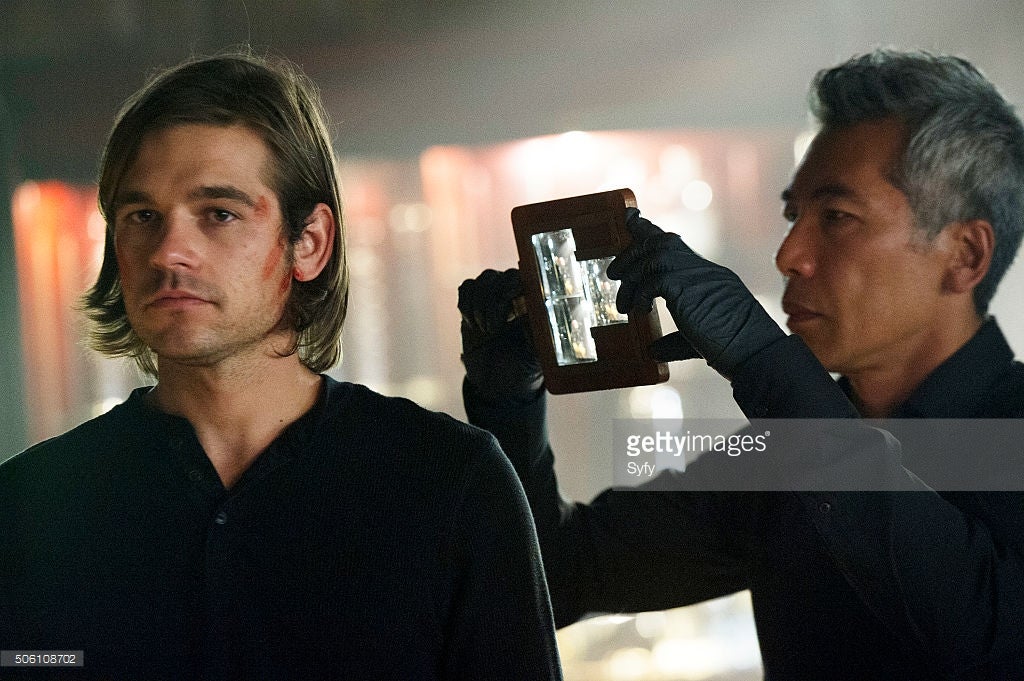
Magic is the tool, not the theme, in Magicians

I’m getting into the Magicians quite a bit, but for while it was hard to pin down why.
First off, maybe I’m reading into it too much, but let’s see. While the literanazies usually comment that much of genre fiction is “adolescent” especially for it's love of the Chosen One trope, the Magicians is more of the collegiate version.
I'll skip over the two obvious spins of that angle, the post-Harry Potter commentary and the addiction allegory, though the undertone I was having trouble articulating about seemed akin to both.
It seemed more like the addition to being a "Chosen One" ... among thousands of other “Chosen Ones” and the sacrifices you make only validate your alleged uniqueness.
Harvard? Yale? Being in the 10% of special people in country? Bah. That pales in comparison to magic school. Suck on that valedictorians!
And yet the show is already hinting that every one of these special snow flakes are all headed towards a crash of realism out in the adult magic world. Just as every wizard graduate from Brakebills will learn that  high scores only puts more expectations to deliver in a world they are outclassed for, so goes it for mundane lawyers, doctors and academia.
You see that some are already finding justifications to avoid dealing with that realization. I.E. at least they are not hedge witches, or worse yet not one of the little people who have no magic. And the hope that if they are willing to keep pushing and sacrificing, they can prove they at least belong if not stand out among peers who are already standing above everyone else. And how those older and more cunning than them are manipulating their insecurity and ambition.
So I knew it's definitely a hubris of some sort,  sometimes, but then some characters use the magic as facade to remake themselves into what they want to be. "I am own greatest creation." Just as others had used magic as something to bury themselves into to hide from their personal pains
Then I realized where I had gone wrong. 
I had assumed the writing room had only picked one theme or one trope. A lot of shows and stories do that. In the past, that was a pretty solid way to go, but I think audiences are more savvy to that now. A show has to keep moving forward now a days.
 Example? Twenty years ago, the old "Hero is stuck in a fake insanity ward" episode would have been in season four of a genre film. 
The Magicians did it as their fourth episode, season one. 
And I think that this show has taken that a step further with magic. Instead of sticking to one metaphor and running it into the ground, on fumes, with a shovel, they've embraced that magic can be many things to many people. It can be a way to power, a place to hide and even a salvation of sorts. 
It could also be a one-way ticket to a personal hell. 
So I tip my hat off to the crew of show. Keep making magic. 

Tuesday, November 17, 2015

Crossing the (Creative) streams

It used to be that not only every genre, but also every industry had a wall around it. If you video game writing, that was about all you did. Now creatives are jumping from fiction to tabletop RPGs to comic books, etc.

Let me introduce you to workaholic, Shanna Germain. Part owner of Monte Cook Games and full on writer/editor of ficiton and RPGs. A talented profession who knows no bounds.

Shanna Germain


Monday, October 19, 2015

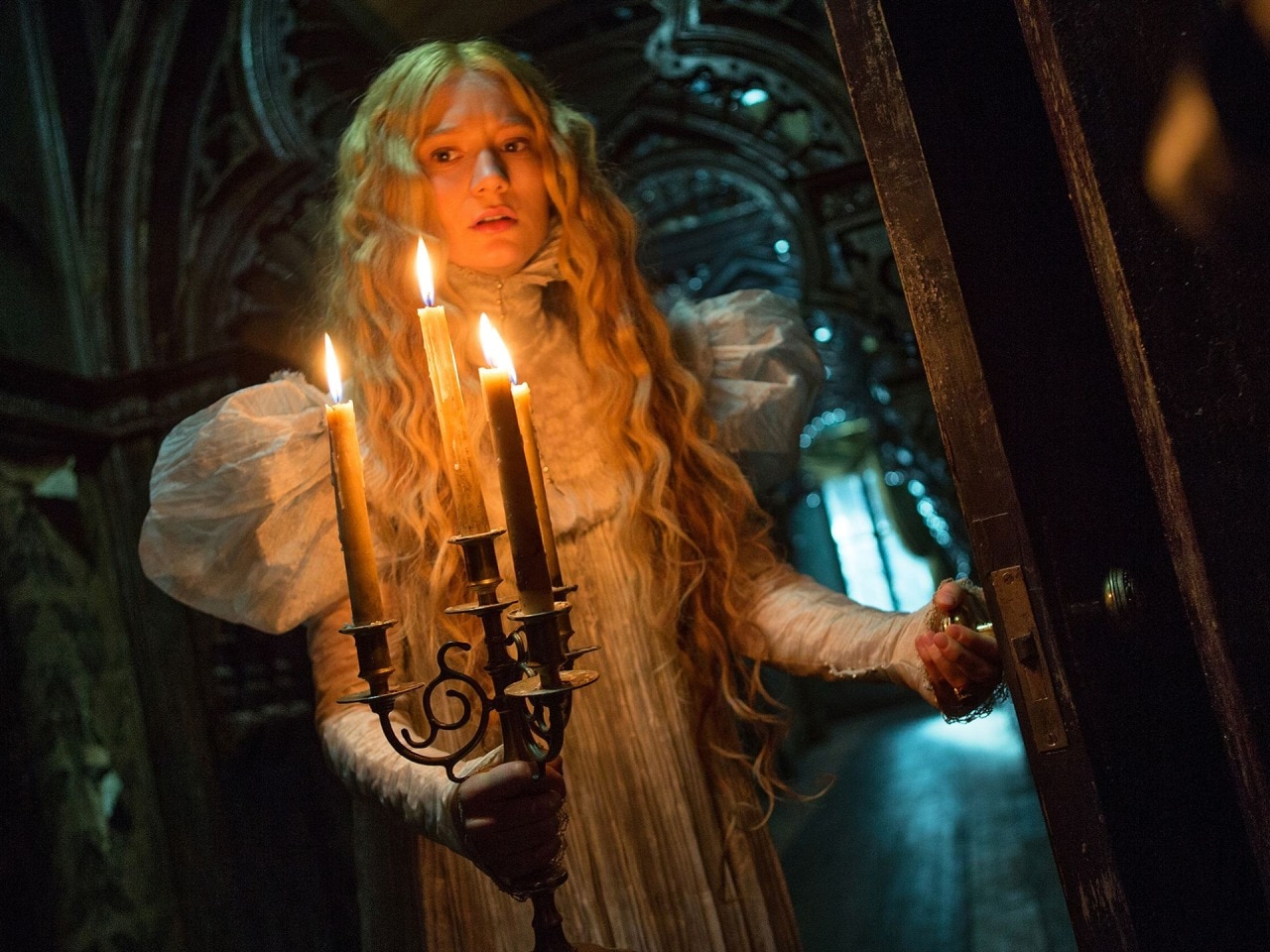
Crimson Peak Kryptonite - Lit Critics


As a writer, one thing that stood out to me was the times when someone wanted to hurt the heroine, they went straight for the figurative jugular. They dissed her manuscript.

Seriously, it might have been kinder to go literal instead.

Perhaps del Toro was channeling his own angst at having his off-kilter style judged or maybe I’m projecting. I’ll take either, or both, truth be told.

Western culture takes a different stance on writing than it does the visual and performing arts. The stereotypes, regardless of the reality, is that when individual artists and performers reach a true level of mastery after years of practice, there’s no true way to deny their achievement. And if you don’t see the true mastery, you’re a bumpkin (don’t point at the painting John, you’re embarrassing me) and there’s whole genres of art that only an acquired taste can appreciate (as in like improv jazz, interpretative dance, postmodern art, and etc.)*

Writing, on the other hand, surely can be done by anyone and thus surely anyone can be a valid critic. And genre fiction itself has long standing history where many "valid critics", both on the street and ivory tower, agree to not waste their time reading it.

While every type of creative needs a coach, writing is ultimately a collaborative art. Some writers need an Alpha reader, others need a few beta readers and almost everyone needs some proofreading help. This is before the publisher comes in with their own team of copy editors (who do the actual line-by-line editing) and editors (who are advocates who focus on the story with — or in spite of — the author.)

A beginning writer who hasn’t found a solid collaborator, someone is more than just a cheerleader, is lost — especially those who know the deck is stacked against them. For them, an unkind word cuts most deep. And in Crimson Peak, that effect was weaponized by the Sharpe family. (In this context, I’m debating if that surname is more pun or irony.)

The Internet has been a boon too young to writers in the recent past. Fan fiction is now considered a legitimate part of a career for writers, it allows for faster feedback and access to receptive audience that might embrace your work.

But these days we also know that the Internet’s evolved into a social weapon. This goes double since writers are constantly baring their souls when their work is read.

So what’s my call to action? Honestly, I don’t know if I have one in a time when stories are judged from multiple angles and agendas.

If you find that a book you read is new writer to you, or just new period, then take a little care when you do your review. If something didn’t work for you, tone down on the snark; but build up the case on why it worked in other novels. Expound on what you enjoyed, yet examine why that put a smile on your face.

As a final word, I’m not advocating that every new writer get a medal for their first effort. That first effort is going to be a horrible first pancake, but how you couch those can make a world a difference. It might give them just a ghost** of a chance at finishing that first novel.

*Side note: I have heard of an award-winning genre writer who left the field to enjoy dancing. She found the immediate appreciation of an audience to be much more rewarding than the years it took to sell her shorts.
**Sorry. Couldn’t resist. I’ll be leaving now.

Thursday, April 16, 2015

Your book, your dreams ...

Recently two things happened.

The first was that a young writer has gotten back in touch with me. He had taken an unintended sabbatical from writing because he thought he was stuck in a rut. 

He loves writing Urban Fantasy, but felt like he couldn't add anything new to the genre -- that everything had been done before. Frustrated that he couldn't come up with a story idea free of cliche or tropes, he eventually stopped writing.

Now he's aiming to be back in the saddle with the goal getting up at 5 am and try to write something every day. Bless him, he's an early riser. For me, it's much more likely that I'll get a thousand words written than get up at that verboten hour. So what's gotten him writing again?

Pretty much a forgettabout attitude. 

For most writers that discover something new, two things happen. Either they catch lighting in a bottle; or they've found a great peanut butter/chocolate mix of ideas and imagery. (The current marketing shorthand for such things is "X"-punk.) So either you need luck or you need time to mix and match things to find that right combo. Your odds of doing so improve greatly by actually writing. So start writing.

But you want to bring something unique, something awesome to the table. Well, they say there are no new ideas, that even scifi concepts -- like robots -- can trace their mythical roots to the golem and living statues that date back to the first pages of recorded history. If that's true, what can you bring that's new?

Stories are a lot like people. The great ones have heart and brains, but they also a voice. And each voice is different. That's what you bring, so bring it! 

There is a time for writer to put their ego to the side. The first draft ain't the place for that, pardner. 

Oh, there was a second thing, wasn't there?

Yep. Lately, I've been noticing that my FB  and forum posts have been getting longer and longer. I've taken that as a sign that maybe my thoughts need a bigger space to stretch their legs. So you might see me blogging a bit more in the past. 

Thursday, January 15, 2015

Gaming your writer's block away

I don't usually have writer's block, per se, as you see it in fiction,* where it's the crippling type that has the writer seemingly blank on ideas, like he's living in a white blank-paged wasteland of imagination.

It's a popular image that's (ironically) inspired different systems and techniques to beat the block. Over the past couple of years I found a few that might do the trick or they're at least fun enough to make your writing breaks a bit more creative.

The latest is a Kickstarted game by Dejobaan Games.

 Elegy for a Dead World


In this recently released PC game, you are the lone survivor of an expedition to an abandoned planet. You aren't the pilot -- or the archaeologist -- you are the poet. Your character roams the beautiful scenery and writes about what they see. You can either write free from or pick a theme, like You Realize The Whole Planet Is Artificial, that prompts your story. Players can also share, read and rate their stories on the cloud.

Roy's Story cubes


You've got  nine dice with pictures, you've got game rules on how two or more players can make a game of storytelling or play solo and see if the mental exercise can loosen up your brain blockage.


 Once Upon an Time


OUaT is a card game that lets people empty their hand as they tell a story, but other's can interrupt the flow with their tale to tell. The game ends when a player ties in their story with a unique "Happy Every After" card, which also has to be their last discard.


Not only is it an award-winning game that's been around for decades (not that I would personally know ... stop looking at me like that.) But there's also a book that turns the cards into fun writing exercises.


So there you go. More ways to incorporate storytelling into your life and fight writer's block.

Or at least a way to tell your internal editor that you're "brainstorming" for a story  when you've got dice and cards in hand.


*The things that stump me are how to express my ideas ... and the willpower to stick with an idea long enough to get it finished.

Monday, November 24, 2014

Space Opera Tropes: the Precursor race. Here to stay?

It's a literary tradition in science fiction that when Hollywood and video games start regularly using a trope that's been around for ages, then it might be time to move on from that trope.

Thanks to Prometheus and Halo, a lot more of the mainstream public is now familiar with the Precursor race trope. For those who watch what's left of the History Channel, it also known as "God is an Astronaut."  The trope evolved to explain (in a retcon fashion) why so many alien races on the screen -- and in books -- have two arms, two legs, communicate with their mouths, and are basically humanoid except for the addition of fur, scales or other bits of Hollywood makeup.

And it's much less cynical to explain that aliens seeded the universe than to admit to convenient writing and tiny budgets.

But as audiences get more savvy, there's been an uptick in  this trope is a nod to the hard science fiction. It helps explain why we can interact with the aliens  — and that we all advanced our technologies at the same rate. And just to further clarify, when I say the same level of tech I mean that the gulf in technologies and sciences are close enough that one can eventually reverse engineer from the other.

Without a precursor race, pure science says the odds of us meeting a race that both resembles us AND shares the same level of tech is near nil. It's much more likely our neighbors will be vastly different, incomprehensible. Their technology will also be on a completely different level than ours. There will be no contest for the side with the better tech. On the other hand, it's much easier to live in peace with a species that shares no common resources or even knows that you exist. ... Until they accidentally wipe you out or vice versa.

The tropes of Space Opera have popped up to help tell a certain style of story to a certain audience. Over time, those tropes have evolved to keep the genre going.

For example, Old Man's War explained that FTL was actually dimensional jumping and terraforming in Firefly explained one climate planets.

You can do Space Opera without FTL (synchronized cryosleep) as in the Lockstep novel. But then again, Altered Carbon tried to have Space Opera without starships (broadcasting downloaded personalities) and that came off more as cyberpunk.

So at this point, the PC trope might be here to stay just like Starships, FTL and big laser guns.

Friday, October 31, 2014

Sound check, check, check. Audiobook time.

I’ve been quiet for a couple good reasons lately. In addition to shooting out a raft of short stories out into the unforgiving world of the slush pile and creeping along with my YA novel, I've been experimenting with audiobook short stories (audioshorts?) by laying down tracks for Small Town Nights.
Here's a sample:


Luckily my buddy Ebony Jones, who has like one of the coolest real life names that I know of, did all the heavy lifting when it came to the directing and sound. I, on the other hand, was just happy to put my old broadcasting skills to use.
But every format has its own quirks, as I found out:
Pick a story that plays to your strengths -- and your limits. If you’re not the sort of person who can make up voices, find a story with only one narrator or a third person omniscient. If you're doing a story with local flavor and your natural accent add ambiance, go for it.  Small Town Nights is an example of that. It was a narrated piece where my Midwestern/Southern accent fits perfectly, once I ham it up.
It’s ten times easier to do straight narration than voices. The real challenge is when you have to come back to the studio the next day and match those same voices again. It’s harder than you think, especially when you the voices in your head are different than the ones come out of your mouth. … Even worse when the voices in your head are telling you to smother peanut butter on your chest. … I’ve had my meds, I promise.
We wasted a good half hour because I was thinking of Sean Connery, when I was really speaking like Deckard Cain. Which is fair, DC is a SC rip-off.
Even if you wrote it, rehearsal is good. Even if the writing is spot on, there’s going to be some hidden tongue twisters in there.
But being your own script-writer is great. Sometimes things that read great on the page suck when read out loud. I’m not saying that the original was bad, but in performing a piece that’s already driven by narrator I found some spots that needed more flavor -- as compared to polish. Soon, future versions of the epub Small Town Nights will have these changes.
Reformat your work. Avoid splitting a paragraph between pages. It will minimize breathing sounds and kept you from absently mindedly turning the page -- and thus reduce the amount of splicing for your sound guys. An aside here, sound guys are going through what’s already happened to Graphic and Web Designers. Since the ease of open source software and the Internet has demystified the technology somewhat, clients new the field have unrealistic expectations and expect rates lower than the industry standard. e.g. They expect a pro to “cut and paste” tracks together for $9 an hour and do it all in under an hour. 
That’s like asking me to draw an owl. You’ll get a stickman owl. Ask an artist to draw an owl:
But we both know how to put pencil to paper. The first clue maybe that the artist is going to use a charcoal pencil while I use an H2.
Home offices/studios have their challenges. Airplanes, motorcycles and thunderstorms can give you retakes or postpone a session, plan according.
The most important part though, is have Fun, as you experiment and create your own audiobook.

Thursday, September 25, 2014

Never let anyone tell you that your idea is not cool enough to publish

Frankly, I wish I had thought of this one. Kud-effin-os.  Just proves that if you do something with enough talent and panache, you can get it published. 

And to prove my point, the Tor.com blog goes into how the cover needed to convey the right amount of menace and not fall into kitsch. If that was my book cover, I'd be hyped.


On the other hand, it doesn't hurt when  you can get GRRM to say it's "Game of Thrones."

Frankly, if anyone else had said that, I'd take that with a salt shaker.  Does anyone think that the statement "Game of Thrones" is now an overused descriptor? For TV, it seems to mean genre TV with cutthroat politics/soap opera. For books, cold  mean almost anything like, "regular fantasy," "grimdark" or even "Our PR maven has no clue."


Wednesday, September 10, 2014

10 Things Writers Should Know about the business side of writing.

Chuck Wendig's blog is always good for shaking the proverbial writing tree and seeing what hits the ground. This week's entry by the talented Kameron Hurley reminds us that all publishers, epub or traditional, are seeing the biz differently than you. They see it literally as a business and your book, and you by extension, as a  product and a method of marketing.

If they don't see you that way, they won't be a publisher for long.

With that in mind, I've got some quick rules of thumb for you about publishers and your writing career. There are always exceptions to these, some of which prove the rule.

  1. A Writer's Vision is for marketing copy only: If you talk about your vision -- as in how a publisher doesn't get your "vision" or your genius -- it's a clue that you don't get   that a novel is a collaborative project. A good editor and publisher can be a godsend on cutting the chaff to make your book a leaner, meaner storytelling machine.
  2. Copy Editors edit, Editors advocate :  When you meet an editor at conference or con, you'll meet your story's champion. They will try to do their best for the story, not you, your story. So while that means they might go to bat for the story against the publisher, they'll also go to bat for the story against you if you insist on keeping things that distract from the focus of the story.
  3. Self-Publish? Congrats you're a publisher: Back in my early days, it was hard enough to wrap my head around the idea that proofreading wasn't done by editors -- they've got enough to handle (advocating, profit/loss statements, finding more quality stories). They hire copy editors to handle the proofing. And you should too. If you can't afford one, find a volunteer. Same goes for covers and probably marketing as well.
  4. Volunteers take their sweet time: There's that old adage that you can have two out of three things when working on a project, either fast, cheap or good. If you're getting a volunteer to help  (especially  people you shanghai in with promises of "exposure.") then prepare for them to take their time. They have lives and are doing you a favor.
  5. Consider yourself on a 10 year plan: If you look up any "New" Writer's award, you'll find a good decade of practice and exposure behind them. Some wrote in fanfic, or advertising or in other fields like RPGs or non-fiction. You are in for the long haul buddy.
  6. Writing may always be your part-time gig: There's more and more scuttlebutt that the days of a full-time novel writer maybe coming to a close, or that it's reaching a long nadir of sorts. I say this not to discourage, but to help brace you for the long slog ahead.
  7. Paid writing is paid writing -- if that's what you want: You may find that if you really want that writing lifestyle, you'll have branch out in ways that keep you at the keyboard, but not necessarily doing what you dreamed of. Fiction novel writing is one of the toughest gigs to get and there's more luck involved than most people are willling to admit. Non-fiction, advertising, how-tos, pretty much everything pays better with more frequency than a novel. 
  8. Business 101 is not Ethics 101: And Ethics 101 is that doing something legal is not the same as doing something that's ethical. As Ms. Kameron Hurley can attest, read your contracts and assume that publisher's know you're going to fight that boilerplate contract that tries to have you sell all of your rights in perpetuity for $500. Or that if you're an artists that negotiates doing your own book cover, then get paid for it as a separate item, otherwise you just did work for free.
  9. Don't write for the market, but that is the harder road: You're going to write your next novel for a minimum of two years, maybe more. You have to love what you're doing or you're lose steam. Sometimes what you think is cool isn't a slam dunk for the marketeers, and that's all right, but know you've got an uphill battle (Says the guys who is trying to pitch a Weird Western.)
  10. Live more, read more, write more: Seeing how real people live and interact, seeing how other writers tackle the same stories as you do and seeing yourself improve will help you inch closer to perfecting your craft.
  11. Bonus Round! Read and write out of your comfort zone: Creativity is like a body that needs food and exercise. And just as eating and excising the same every day short changes a body, the same goes for your writing. Try new things and stretching yourself, you may discover unexpected inspiration and new tricks.
Now go fourth, my writing comrades and write!

Saturday, August 30, 2014

The road less traveled, or maybe more traveled than not

Good ol' Chuck has another guest blog by Tom Pollack about how to juggle this crazy career we call Part-Time Writer. (Don't call it a hobby and don't call yourself "aspiring" just write, damn it!)

I'm blogging about it, so I must have a few thoughts myself on the subject. Consider them more of an extra table of goodies to Mr. Pollack's buffet of ideas. 

Plan Your Time
Beyond Planning your time, steal time back when you can. Be a complete klepto when it comes to pens/pencils, paper and your downtime. Instead of whipping out your smartphone and making Angry Birds angrier, jot down a few sentences .

This does two things; inch you closer to your weekly word count and trains you to jump into writing mode faster. Not only will have less guilt about a slow day when all those extra sentences got you over the hum, you're more likely to skip that thirty minute Internet "warm up" on io9.com if you've learned how to write a romance scene in a frigid, noisy airport.

Stick To Your Plan -- But Don't Let It Turn You Into an Asshole.
I think Tom is close to something here, but missed a bigger truth to writing. The truth that a writer pretty much a paradox who in one moment has to lock themselves in a oubliette, pull a rope to close the top and write in utter solitude and in the next moment is in the middle of humanity, seeing it for all of its wonder (and terror.)

'Cause in order to write characters that make your readers empathize with the human condition, you have to see, hear and taste that particular condition for yourself.  And you can't do that chained to your laptop. 

Enjoy It
You have to, or it will burn you out faster than roman candles duck taped to gas cans. This not only goes for the writing part but also the "go forth among humanity" part as well. 
Perhaps the best way to think of it is this way: Most people have to have their own children before they rediscover the wonder in life through the eyes of their little ones.

But as a writer, you always have to have your inner tyke on tap.


Yakity Yak, Here's some feedback

The great speech recognition experiment is done.

And in the end it wasn't so great. The software worked for a while and the diction was close enough that it greatly helped my output for a while.

But at some point, the software's accuracy went downhill instead of improving. Worse yet, the mircophone that came with the software didn't want to synch up with the program half the time.

So what started as something that was close enough to remind me of what I had original intended, became a slog of rewriting that had me seriously wondering if I had really gained any ground. And despite my best efforts, I was missing more typos than I was catching.

When my writing workshop mates reported that my last submission was a new low point grammar wise, that was the final straw.

So now it's back to the slower, more silent, typing and handwriting efforts of the past.

Thursday, July 31, 2014

Yep. That's pretty much how Starbucks is.

http://pvponline.com/comic/2014/07/27/game-of-thrones

When that urge to be a "Starbucks" writer hits me, I gotta look at the time. If it's past 5pm, forget it. The 7-person knitting circle has taken all of the comfy leather chairs.

I don't make this stuff up, honest.

Wednesday, July 16, 2014

Three bags of hurry up and wait

Well, that took a bit longer than I thought it would.
The prize aspect of a writer is discipline. You got to keep your butt in the chair and keep plugging away. Even when you’re staring at a screen that says “Uploading your ebook now.” That’s not so great for my ADHD.
My plan to e-publish was two-fold. The first was to provide several short stories so that potential readers could have more content to choose from. The second was to spread my distribution among the big three -- Amazon, Nook and Smashwords.
But if you have 7 shorts that essentially means you’re uploading 21 stories. I should have thought out that math earlier. So my plan to do a massive upload in one day turned into more like a week. Technically, I could have done it in a day, but I would have gnawed off my arm by the end of it, and learning to type with one hand is a bitch.
At this point, the experience of it all is a bit blurry (having a cold that week didn’t help). But from what I can remember …
For any of the three e-publishers:
·         They will want your tax information: It’s the price (or payment) of doing business. If you haven’t incorporated yet, they will take your social security number in lieu of your tax ID number.
·         If you have the  .doc file and a short story, you’re all set: it’s savvy to learn how to set up your formatting and TOC for your novel in Calibre or Scribe. If you have a .doc (not .docx) file, though, all three publishers have online conversion tools that should work for short stories.
·         Each company has different cover sizes and they change without notice: Do your homework on the covers.
·         For all the talk of how traditional publishers want to straightjacket you into a marketable niche, the genre labels for these companies are mostly either generic or what’s trending. If you happen to have a post-apocalyptical Science Fantasy short in the vein of Vance’s Dying Earth, good luck with that getting lumped into Science Fiction, Apocalyptical, and Adventure. And the Fantasy genres will only touch on Epic, General or Contemporary/Paranormal.  If you’re lucky, you could find Steampunk. Unfortunately, the pull-down menus for these are clunky. I’ll get to tags/labels with each publisher.
·         And no matter the publisher, if you have more than one book online, then you probably aren’t going to be happy on how you have to drill down in the reports to see what’s really going on with the sales numbers. That’s for just 7 stories. I can’t imagine what hoops the writers who have dozens of stories have to jump through to understand their data.
·         A “Same entry as last time” for things like author, publisher and price would make the process much less of a time suck.
·         Have a “cheat sheet” of your blurbs, tags and author bio handy to do a lot of cut and paste
Now for the individual guys:

Amazon:
You sly, sly dogs. I’ve already said that Amazon tries to make themselves a convenient one-stop shop for an author. They allow you to use Styles from Word to set up the formatting for TOC and offer a gallery of customizable book covers. However, then they’ll try to tempt you to go exclusive with them. (But do you really want only one company holding all the cards at the end of the day?)
Amazon only allows 7 tags for your product and offer limited genre choices. The biggest positive is that I saw one or two instant sales -- but then afterwards, nothing.  My cynical side wants to think that Amazon has a slush fund for buying the first copy of a writer’s work. If they can keep you hoping, then you’ll keep putting out content.
Not that I have any proof of such a silly idea. Maybe I should just pat myself on the back that I got lucky day one.
Uploading takes forever and you can’t really go on to the next project as you wait. The whole process happens over several different screens.
The actual publishing of your ebook takes 24 hours.
Nook:
Nook doesn’t offer you a free cover, but they do try to make themselves your browser-based word processor/Scrivener project manager. If you have any bold or italics in your document, you’ll have to go back and add them in via the Nook system.
I seem to remember this one was the most clunky to work with, though they seemed to have the most flexible system for cutting and pasting your tags in.
Again, uploads take forever and it seems that you take chances if you try to skip to the next project. You have to go through several screens related to different silos (price, audience, actual upload).
The upside is, they publish your ebook in a few hours.
Smashwords:
How I hate and love you.
Smashwords had the only single upload screen process, which was great, and the process actually invites you to upload something else as your ebook is translated in any format you need. Neat.
But SW has the most proprietary system for formatting your work (which at the very least means including a copyright that names your submission a “Smashwords Edition.”) For example, Their Word TOC system works off Bookmarks, not Styles and other odd bits.

->TL:DR Read their handbook. It will save you from a lot of grief later.
Even though the actual upload is painless, it take days -- yep days – for a story to go live. It makes me imagine that they have a light-starved gnome locked in a server box, reading every upload by the light of a candle and a Sega Genesis.
I still believe enough in my strategy that I’d do it again. But in the future, I’ll be adding individual stories and remember that I have to multiply my efforts by three.  
’Cause as an ebook author, there’s no such thing as bulk shipping.

Friday, March 14, 2014

Say it agian?

So I'm trying something really new this time.


I was in the store, and I noticed that the Dragon speaking software for only like $30, which also came with a microphone set. 

In the past, dictation software, while out of my price range, has been appealing to me for a few reasons:

  • I have a few learning disabilities that drastically slow down my output and technology has been a big help in the past.
  •  I've always noticed for my personal writing has two phases.
  • A crazy creative phrase where I'm pacing back and forth on on the floor thinking about my story and what's happening next. Sometimes I ramble to myself or repeat lines of dialogue to get an ear for how it sounds. It's when I seem to be my most imaginative. Call it my right brain jazz.
  •  But then I'd sit down in my brain seems to stop when I have to meet with my fingers to type. Call it my left brain OCD.

I've also been trying to go for a new method where my first draft is all rough output to be corrected later as I go through Draft 2, Draft 3, Draft 4, etc. But I getting too distracted by all the wiggly red lines under the poor spellings, the bad grammar, etc. Distraction Free Writing Software used to help with this but then I discovered that most of the free versions of this sort of app let you get back to the Internet with Alt-Tab.
Oh Internet, you cruel, cruel mistress. Why must you tempt me so. But apparently, it's harder to be tempted by Io9,com  when you're pacing the floor and talking to yourself like you're used to having padded walls.  (Man, I need to get a longer cord for this microphone.) 

So I decided to grab the Dragon software and see what would happen. Now I admit I'm keeping my expectations are very very low. As long as the software can dictate my long run-on sentences with some accuracy so I can get back to tweaking them later with silly things like punctuation or the correct homophones, then we'll be walking in the right direction. 

It's going to be long road before I get this thing to do a better draft than that. Thanks to my hours of voice to text over my phone, it doesn't sound so weird to say "period" at the end of sentence, but anything more than that kills my focus right now.

At first blush, seeing as how using this setup on Day 1 got me almost 1000 words for my novel in an hour, I'd have to say that it was worth $30.

Side note: The first draft of this article was written totally in Dragon speaking software. There were changes, trust me.

Friday, December 6, 2013

I Lost ... No! I WON!

Well a 72 hour work week will kill your NaNoWriMo word count, like dead. So for those who like to keep score, I "lost" at NaNoWriMo.

But when my raw output goes up by a multiple of four and I get a third of a book out in 6 weeks  (remember, I was cheating.) ... I'm calling that a personal best and moving on. 

If I keep that up, I'd still hammer out a novel in under 6 months. There was a time I'd go "phhhhhft. Never. Not from me." But now I can see there's a light at the end of the tunnel. 

I'm taking a break, though. I going to work on some self-published short stories that I'm aiming to have up early next year. ... which is like more like a month. 

And according the always crazy, beardthulu being, Chuck Wendig, it never hurts to get some space between you and your work.

So ready or not Behold!  The crazy wisdom of Chuck on NaNoWrimo!

The NaNoWriMo Dialogues:

I took more than just an increased first draft writing speed away from this go around. 
  • If you're doing NaNoWriMo right, you don't have time to kibitz with other writers about NaNoWriMo.
    • Ergo, make any month your own personal NaNoWriMo
  • That characters drive plot. That interesting characters with conflicts and drives that have to overcome a challenge creates plot.
  • World building that the reader never sees is a safety net. Learn when you don't need it.
  • Even people who support your writing sometimes just don't get it
  • Writing is all mental, thus it's all mind games when your stuck.
  • On the first draft, there is no right answer. It's the "right now" answer that keeps you writing.
So, I'm off. I got a lot of editing ahead of me.


Wednesday, November 6, 2013

Old Habits, how soon we go back to thee (NaNoWriMo)

GrrrrrrArrrghhuggh!

Nope, that was not me doing a drunk Chewbacca impression. 

Here I am hitting the keyboard for effin NaNoWhat'sit and it was going ... okay ... at first.

I had a lot more typos because I was sailing ahead on the whole "It's about the words. Rewrite later. When you like have a whole novel to rewrite." 

But this week, I find myself going back and tweaking and tweaking. Sure, the end result is better. But I could still be doing that next month. (Why is there no NaNoRe-WriMo?)

Okay. I could blog more about it. But then, that's less time writing, right?

Dang. I can't win, can I?

Tuesday, October 15, 2013

Feeling like a "real" writer

To be honest with myself, I've written thousands of words and had millions of people read my work. As an advertising copy guy, that's par for the course.
But yet I don't feel like a real writer. My heresy has always been in wanting to tell cool, fun stories. So even though I make a living writing, I'm still holding out on saying I am writer until I get a novel published.  Which the cynical grown up in me knows is silly.
That's changed a bit, lately.
I'm still shopping my latest novel around after World Con, have three shorts to edit and working on a first draft of my next novel. My fiction plate is heaped with the tasty.
I feel like I was on a diet back when I was doing one novel. Now I'm cooking with gas.
Speaking of, I wonder what's for dinner?

Tuesday, October 8, 2013

Cheating at NanoWriMo ... Your new S.O.

If your a beginning writer, have you heard of National Novel Writing Month? It's pretty much what it says on the tin, an organization that promotes writers of all stripes to try for 50,000 in one month.

Holy Spit! You do know that's like more than 10,000 words a week right? True. That makes it 5k in 2.5 days, That boils down to over 2,000 words a day or 250 words an hour if you clock in for 8 hours.

And to make you feel more like underachiever, there have been published novels that come out of this. 

But if you're focusing on that, you're missing the point. 

NanoWriMo is about stretching your limits, assessing your weaknesses and discovering something about yourself as a writer.

A great example of that is the common complaint that NWM is in November, like the "All the family is coming down to start eating me out of house and home for the next month" November. This also the "No one else in the office because they've got family in town and we're trying to squeeze two months of work into what's effectively four weeks of productivity. Long days, here I come" November.

The answer is that "There never is a perfect time to write, so write every day anyway."

That's a great lesson and all, but Auntie Melissa needs my kitchen and hands to make the best damn turduken lasagna you ever tasted. So here are my tips for cheating at NWM and hit your targets in November.

In no practical order:

Start two weeks early/Go for 40k words instead: The goal is get to a new place in your writing. If it makes the task less daunting, tweak your goals a bit. Some pro organizations accept writers who work in the 40k range.

Oh. Shit. I guess that means this is your week to start. Go!

No flat surface and no writing implement  is safe from you: Who said that your word count had to be on the keyboard. Quickly count those words you wrote on that napkin, or the notepad you always keep in your back pocket. Crayon, Japanese inkstick/brush, and monkey poo are allowed. All at once if that gets the job done.

I lied about the monkey poo -- what's wrong with you!?!

Realize this a personal marathon, not a race: The NWM board and forums are not the place to lie if you are full on cheating. But they are the place to find kindred souls are going through what your going through because by about week two there's no real difference except the final word counts. 

Keep in mind the real winners those who reach a new plateau. If NWM was your inspiration that's close enough.

Get brutal about your reality check: Been told constantly that you over plot your stories, give 10 page infodumps, or spend too much time shooting for a 200,000 epic all in 17th Century Urdu? 

Then listen and reassess what your story is going to be. Make your story simpler, stop beating yourself up for the perfect metaphor. If you do tons of world building, do a modern take on your story or embrace a more pop culture/pulpy style. 

I'm not saying that you should make it opposite day for your NWM project, but maybe it's time you really wrestled with that one howler monkey on your back that EVERYONE has told you  about, but you keep falling back on. And once you pulled that primate off your spine, beat it with a lead pipe ... in the library ... and then frame Col. Mustard for it.

Do what you do best, baby: On the other hand, if your workshop mates keep telling you that you shine at something, embrace it.

Your making cookie dough, not baking the cookies: Everyone loves the cookie dough, until they get food poisoning. The baking part not so much, there's the waiting, the watching and the judging if it's time to pull it out of the oven.

The goal here is volume because every first draft is shit, even if that first draft is the fun crazy part of creating. The real work, though is putting that draft through the hot oven hell of re-writing and editing. Or as one of my favorite writers succinctly said. "I spent one month writing it and a year editing it."

All those published novels that came out of NWM? I bet the finished product looked like a Lamborghini compared to that Kia first draft.

Fuck your toughest critic .... you!: Art is messy and it take time to be perfect. This month you have to turn off that inner critic/snooty adult/snide frienemy and just let it flow.

I'm going to try this challenge myself, we see how I do. My first cheat is lowering the word limit ... for now. The challenge will be to come up with a new concept for a novel this week for NWM. 

Gentlebeings, start your keyboards and GO!

Monday, October 7, 2013

Write Short To Write Long?

In my effort to procrastinate, this let to that advice from John Scalzi. So the advice he gave was Write Short To Write Long.

I tried to find where he's said that before, but didn't have any luck.

Right now (heh. I almost misspelled that in a very subconscious way), I'm taking a break from the final polish on my novel by banging out some short stories. The plan is that most of shorts will go up, self-publishing style to create that "critical mass" where if a reader enjoys one short, he can find a few others while he's still in a buying mood.

Sort of like offer another fudgey chocolate chip cookie while a friend is still holding a cold glass of milk. How can he say no?

 Ironically, these shorts are taking longer than expected. Each one has to have a new concept even if it shares the same characters. And the villain has to be different in each one.

At some point, I hit a stride in a novel. The characters seem fleshed out and the villain's vision is clear. From that point, the rest of the first draft is writing the fallout of all that. The rewrites patch holes in the continuity and certain events get a new focus or spin so that drama and character growth happen more consistently.

So not only does Mr. Scalzi's advice leave me non-plussed for now, it seems that I'm writing long for short.

Not my most productive month so far. :P